
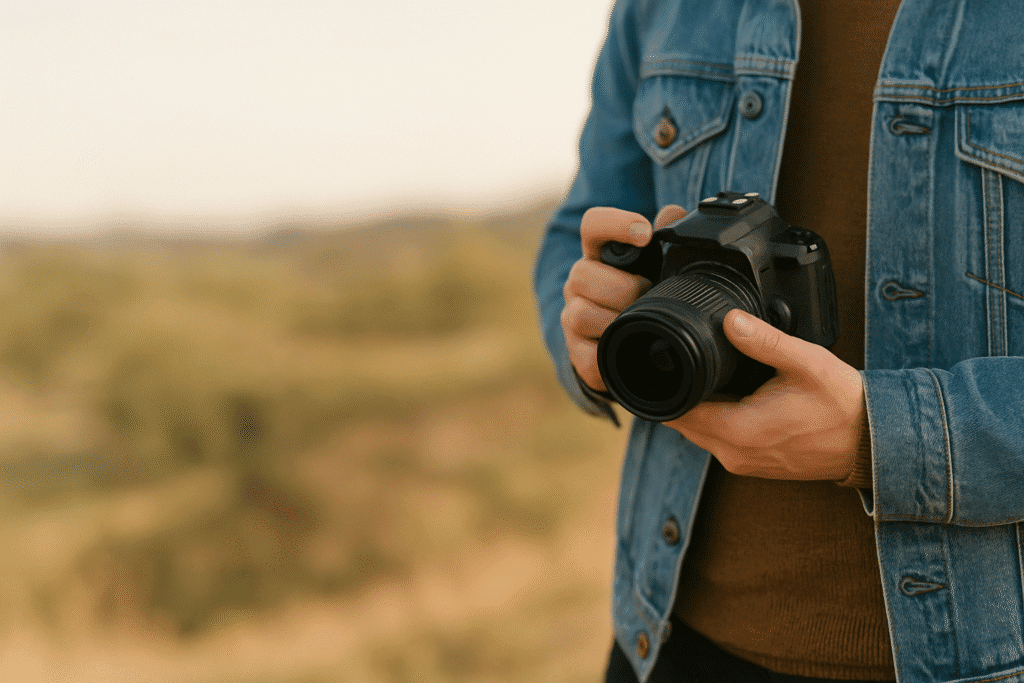
The Basics of Photography — A Beginner’s Guide to Capturing the World
Photography is more than just pressing a button. It’s the art of seeing the world differently — capturing moments, emotions, and stories through a lens. Whether you’re using a DSLR, mirrorless camera, or even a smartphone, understanding the fundamentals will help you take better photos and express your creativity with confidence.
1. Understanding Your Camera
Every camera works on the same principle — light enters through the lens and hits a sensor (or film) to create an image. Learn your camera’s settings: aperture, shutter speed, and ISO. These three elements form the exposure triangle, which controls how bright or dark your image appears.
2. The Exposure Triangle
- Aperture (f-stop): Controls how much light enters through the lens and affects background blur (depth of field).
- Shutter Speed: Determines how long the sensor is exposed to light. Fast speeds freeze motion; slow speeds create artistic motion blur.
- ISO: Controls the camera’s sensitivity to light. Lower ISO gives cleaner images, while higher ISO helps in low light but adds grain.
Balancing these three gives you full creative control over your photos.
3. Composition Matters
Composition is what turns an ordinary photo into something eye-catching. Use techniques like the Rule of Thirds, Leading Lines, and Framing to create visual balance and interest. Think about your subject’s story before taking the shot — every frame should have purpose.
4. Lighting is Everything
Photography literally means “drawing with light.” Natural light is often your best friend — shoot during golden hour (early morning or late evening) for soft, warm tones. Experiment with shadows, reflections, and backlighting to add mood and depth to your images.
5. Post-Processing
Editing allows you to perfect your shots. Adjust brightness, contrast, and color balance to match your creative intent. Tools like Adobe Lightroom, Photoshop, or mobile apps such as Snapseed can help refine your work while maintaining natural tones.
6. Practice and Experiment
Photography is a continuous learning process. Capture different subjects — landscapes, portraits, street life, or macro shots — and study what works. The more you shoot, the better you understand light, perspective, and timing. Over time, your unique photographic style will emerge.
Conclusion
Photography combines science and art. Once you master the basics, you can experiment, break the rules, and create your own visual language. Keep practicing, stay curious, and let your camera be the tool that helps you capture the beauty of your world.